How Childhood Trauma Lives in Adult Relationships
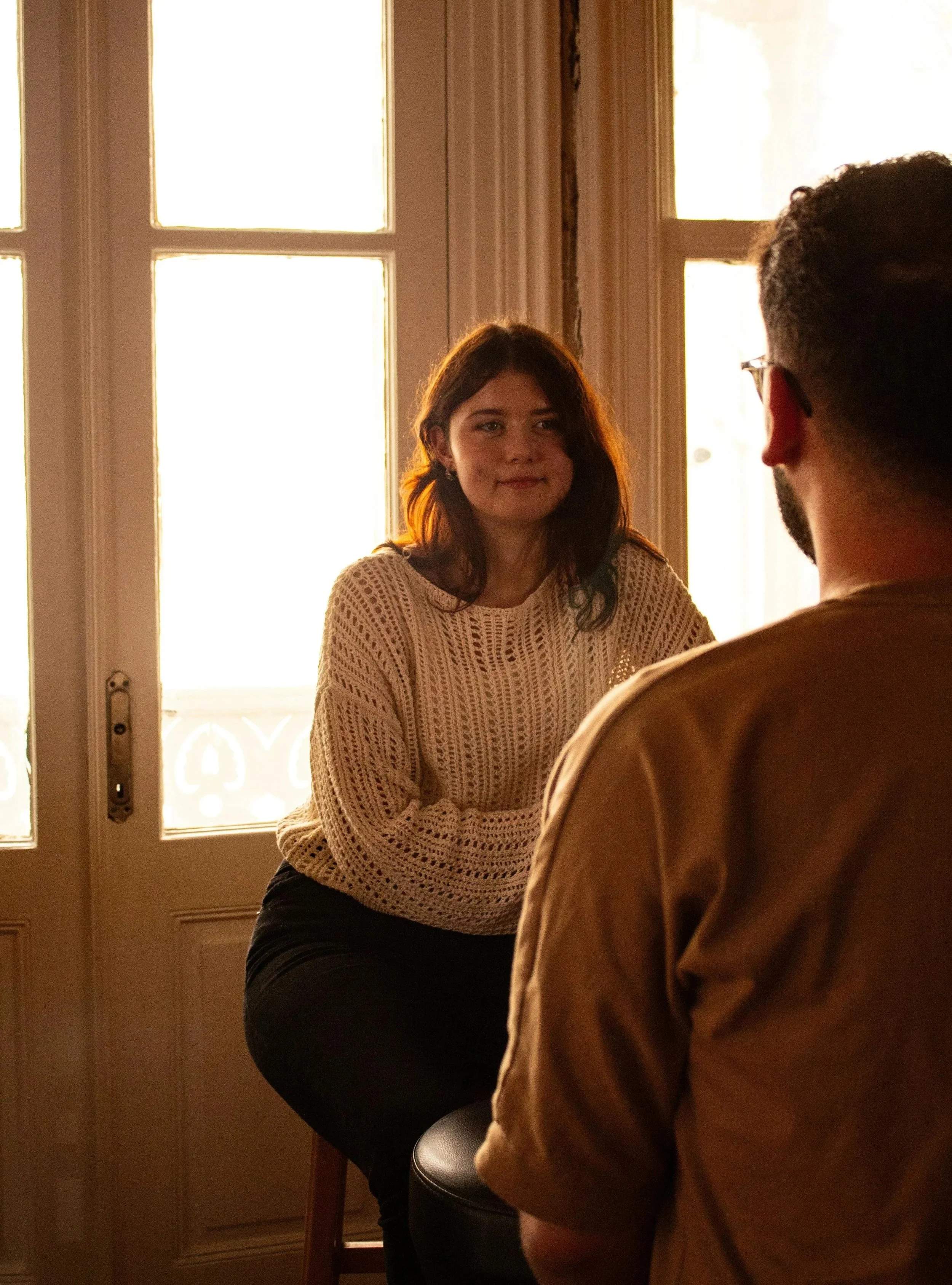
There was a time when there wasn't enough safety to fully process what was happening around you.
The ways we relate in adult relationships are often shaped by early attachment experiences how we were met, held, or not fully seen as children. These early imprints don’t disappear. They continue to influence how we experience closeness, conflict, and emotional safety.
Your nervous system adapted in the only ways it could. Those adaptations weren't a choice they were how you stayed connected, how you endured, how you made sense of what was too much to hold.
They were intelligent. They were necessary and they didn't disappear when childhood ended.
Childhood trauma doesn't simply fade with time. It tends to resurface in relationship not in obvious ways, but in patterns. Pulling away when someone gets close. Over-monitoring tone and distance. Fear that feels larger than the moment in front of you. A sense of finding yourself in dynamics that feel strangely familiar, not because you chose them, but because something in you recognizes them.
Why It Repeats
Children are wired for connection above almost everything else.
When safety, consistency, or emotional attunement are disrupted, the nervous system reorganizes itself around protection. It learns to anticipate. To scan. To manage.
If love felt unpredictable, you may have learned to watch carefully for shifts in tone, in distance, in the subtle changes that preceded hurt.
If your needs consistently went unmet, you may have learned to silence them rather than risk disappointment.
If connection was lost, even briefly, even in small ways you may have learned that loss could arrive at any moment.
These aren't flaws. They're responses that made complete sense at the time.
But what once protected you can later influence how close you allow someone to get.
A delayed text can feel like abandonment. A disagreement can feel like the relationship is ending. Closeness can feel both deeply wanted and threatening. In these moments, it's not only the present you're responding to it's something older moving underneath it.
The Body Remembers
When something is triggered, the body responds first. Tightening. The impulse to withdraw or to reach. A wave of emotion that arrives before thought does or no thought at all.
This isn't overreaction. It's memory without words the nervous system doing exactly what it learned to do, in conditions that once required it.
In relationships, these responses don't stay internal. They create the space between people. They influence what gets said, held back, misread, and repeated.
Working With It
Change doesn't begin with forcing different behavior. It begins with noticing.
A pause instead of a reaction. A recognition in the middle of a familiar pattern this feeling is old, not just about what’s happening now. That gap between trigger and response is where something new becomes possible.
Regulation matters not as a technique to manage or suppress yourself, but as a way of staying present enough to have a choice. When the nervous system is flooded, there is no choice. When it has just enough ground, there is.
Even small shifts accumulate. They're not nothing.
Healing in Relationship
Healing rarely happens in isolation. It happens in moments.
When something you brace for doesn't come. When you are met with steadiness instead of withdrawal. With presence instead of dismissal. With repair after rupture rather than silence.
These experiences can feel almost too small to matter. But they reach somewhere the mind can't access through understanding alone. The body starts to learn slowly, through repetition that connection can feel different than it once did.
A new pattern begins to form alongside the old one.
From Repetition to Something New
Without awareness, patterns repeat almost invisibly.
With awareness, a space opens.
You begin to see what is happening the familiar pull, the old response beginning to move through you. And in that recognition, there is the possibility of something different. Not perfectly. Not all at once. But enough to begin.
A Different Relationship to the Past
What happened to you matters. It lives in the body, in how you respond, in what you protect yourself from. It does not have to define what is possible now.
The same system that adapted to survive can also change not by erasing what happened, but by slowly building new experiences that tell a different story.
You are not repeating these patterns because something is wrong with you. You are repeating them because something in you is still looking for resolution.
And resolution is possible.
Slowly. Through awareness. Through moments of being met differently. Through staying present even imperfectly, even briefly when the old pull is strong.
Even reading this and recognizing yourself in it is a beginning.
If you're exploring this more deeply, you might find these pieces speak to a similar place:
Healing Attachment: How the Body Learns to Stay
Before You Had Words: Prenatal Imprints and the Forming Self