When the Pattern Feels Older Than Your Own Life
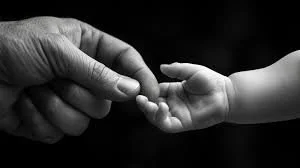
Pain that isn't processed doesn't disappear.
It finds other ways to continue passed forward through patterns, responses, and ways of relating that began long before the people now living them were born. What we see around us can look entirely new: anxiety without a clear cause, disconnection that makes no sense, tension in relationships that never seems to fully resolve.
But much of it has been carried forward.
Each generation inherits both what was resourced and what was not. The strengths, the resilience, the capacity for connection and also the unfinished, the unspoken, the unfelt.
Even if it didn't begin with you, you may still feel its weight.
And you also have something earlier generations often didn't: awareness. The possibility of meeting what was carried and beginning to change how it moves through you.
We Are Shaped by More Than Our Own Experience
The families we are born into carry patterns emotional, relational, behavioral that were already in place long before we arrived.
These patterns ripple out from a wider family system, one with its own emotional structure and history. (this is explored further in Ancestral Trauma: Healing Intergenerational Patterns )
We absorb them before we can understand them. Before we have language for what we're sensing. Before we know that what we're experiencing as simply how things are might in fact be how things learned to be, in response to something that happened generations ago.
What we call personality can sometimes be adaptation. Not something chosen, not something fixed but something that formed in response to what was present, or missing, in the environment we came through.
How Trauma Travels
Trauma doesn't only belong to the person who first experienced it.
It can be carried forward through the nervous system through responses, expectations, and the felt sense of what is safe or unsafe, long before there is any conscious understanding of why. It may show up as anxiety with no traceable origin, emotional distance that persists despite genuine care, a sense of over-responsibility that arrived before you were old enough to question it. Numbness. Hypervigilance. A low-level alertness that never quite switches off.
Often without a clear story to explain any of it.
What once supported survival in difficult conditions can begin to feel limiting in a different environment in a life where the original threat is no longer present, but the body hasn't yet received that message.
The Body Holds What the Mind Can't Place
The body holds experience differently than the mind.
It doesn't organize around time in the same way. Something from long ago something that wasn't even yours to begin with can feel immediate and present when it is activated. A tone of voice, a look, a moment of conflict or distance can trigger a response that seems disproportionate, that carries a weight the current situation doesn't fully explain.
This is not a malfunction. It is how the system learned to protect responding to echoes, pattern-matching across time, keeping watch for what once required watching.
What didn't complete continues. Until it is met.
This Is Not About Blame
It is worth saying clearly: none of this is about fault.
Not about parents who failed, or grandparents who should have done things differently. Most of what was passed forward was itself received shaped by hardship, by circumstance, by a world that didn't offer the conditions needed to process what happened. What was unfinished was often unfinished because there was no other choice.
This is about understanding that we arrive already embedded in a relational and emotional field one with a history and that history lives in us whether or not we are aware of it.
Awareness doesn't assign blame. It opens the possibility of something different.
What You Might Notice
Working with inherited patterns begins with noticing without forcing conclusions.
Where do you find yourself repeating something you didn't consciously choose? Where does a reaction feel older than your own life, carrying a weight that the present moment doesn't fully account for? What do you keep encountering, even when you've tried to change it?
And alongside those questions, it's worth noticing what else was passed on. Strength. Resilience. Creativity. The capacity to endure, to adapt, to love. These, too, are part of the inheritance not despite what was difficult, but often because of how people found ways through it.
Gentle Questions to Begin With
There is no need to force answers. Sometimes the question itself is enough to begin shifting something.
What feels familiar in a way I can't fully explain?
What feels like it didn't begin with me?
What do I keep meeting, even when I try to move in a different direction?
Sitting with these questions not analyzing them, simply holding them can be the beginning of a different relationship with what has been carried.
What Changes Through Awareness
Something shifts when what has been inherited is met with awareness rather than lived unconsciously.
Not all at once. But gradually, patterns that once repeated invisibly become visible and once visible, they begin to loosen. Responses soften. There is more space between the trigger and the reaction. A sense of something becoming, slowly, more yours rather than simply something moving through you without your participation.
This doesn't erase the past. Nothing does.
But it changes how the past lives in you. And in that change, something that has been traveling a long time can begin, at last, to settle.
You are not responsible for what came before you.
But you are in relationship with it.
And when something inherited is finally met even briefly, even imperfectly it doesn't have to continue in exactly the same way.
What was carried forward can begin to change here.
With you.
If you're exploring this more deeply, you might find these pieces speak to a similar place:
Why Healing Feels Like Fear You Didn’t Create
What Begins Before Birth: Prenatal Imprints and Early Experience