Embodied Listening: You Cannot Offer Presence You Don't Have
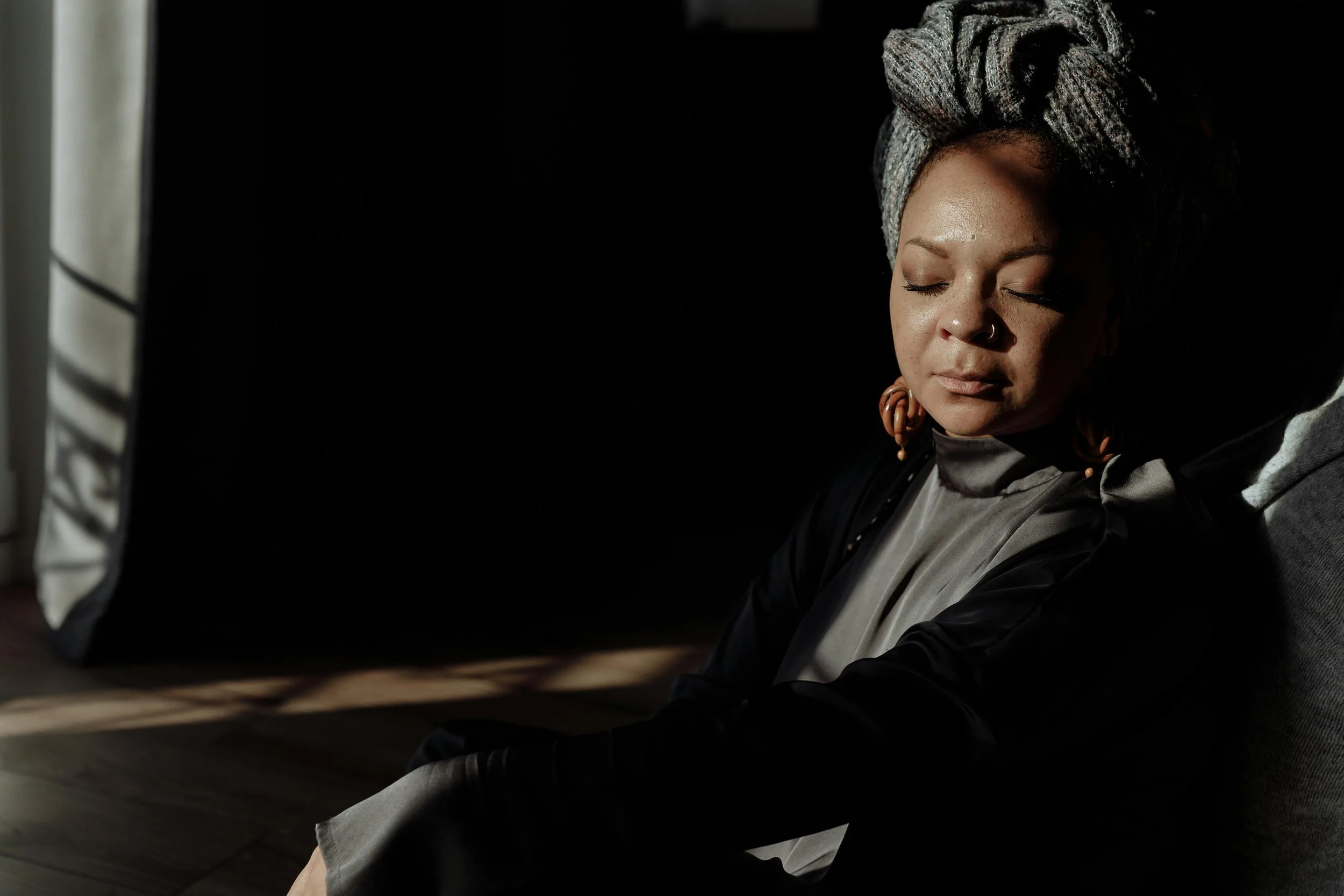
We communicate constantly through words, tone, gesture, and the quality of attention we bring to another person. But communication is not only about speaking.
It is about listening.
And most of us, if we are honest, are not fully listening as often as we think we are.
In a world saturated with information and noise, the nervous system is perpetually overloaded. The result is subtle: we lose contact with the quieter intelligence within us. The inner voice the one that knows something before the mind has organized it into language is drowned out by comparison, and the constant mental chatter.
Embodied listening is the way back.
Listening Is a Whole-Body Experience
We think of listening as something that happens through the ears. But true listening is multisensory, somatic, relational a whole-body event that most of us were never taught to cultivate.
When listening becomes a full-body practice rather than a cognitive exercise, something opens. The capacity to sense tone, breath shifts, and subtle emotional cues in others and in ourselves simultaneously develops naturally. What once required effort begins to happen on its own.
Your ability to communicate clearly is directly connected to your capacity to receive and perceive. These are not separate skills. They grow from the same root: the willingness to be genuinely present rather than simply appear present while doing something else internally.
What Gets in the Way
Most of us believe we are listening. And in a sense, we often are.
But beneath the appearance of attention, something else may be happening. We are rehearsing what we're about to say. Preparing a defense. Jumping to a conclusion before the other person has finished. Filtering what we're hearing through the lens of a previous experience. Half-present, half somewhere else.
When the mind is occupied with its own movement, presence collapses. The other person feels it not always consciously, but in the quality of the exchange.
Modern life reinforces this pattern. We are conditioned to react quickly, to process fast, to move on. Embodied listening asks for something different. It asks us to slow the process down enough to actually be inside it.
The Foundation: Knowing Where You Are
One of the most important principles of embodied listening : you cannot offer presence you don't have.
If you are disconnected from your own inner experience, genuine connection with another person becomes difficult not because of lack of care, but because there is no ground to meet from. You can perform attentiveness. But you cannot be attentive from a place of internal disconnection.
The more you cultivate a conscious relationship with your own inner landscape your breath, your sensations, the emotions moving through you, the quality of your attention the clearer and more grounded your communication becomes. Not as a technique, but as a natural consequence of actually being here.
This is where somatic intelligence meets relational healing.
What Embodied Listening Actually Is
Embodied listening is conscious, whole-body presence in the act of receiving another person.
It means staying grounded in your own body while remaining open to someone else's experience. Witnessing without immediately interrupting or fixing. Allowing silence to do what only silence can do. Letting the other person feel genuinely feel that they have been heard.
It is listening without immediately offering advice. Holding space without shifting the focus back to yourself. Noticing your own breath, your own tension, your own emotional responses and remaining curious about all of it rather than managed by it.
You are not only hearing words. You are listening with your whole being.
The Intelligence the Body Carries
Your body is transmitting information continuously breath patterns, muscle tension, gut sensations, subtle shifts in energy that arrive before thought has had time to organize itself into meaning.
Embodied listening includes learning to receive this information as the intelligence it is.
What does this feel like in my body right now? Where is there openness, and where is there contraction? What emotion is moving through me as I listen to this person?
These are not interruptions to the conversation. They are part of it a parallel stream of information that, when attended to, makes the listening richer and the response more honest.
Practices that strengthen this kind of embodied awareness conscious movement, time in nature, breathwork, anything that returns attention to the felt sense of being in a body build the nervous system's capacity for deep listening over time. Not because they teach a skill, but because they restore a sensitivity that the pace of modern life tends to erode.
Presence as Something Given
Offering someone your genuine, undivided presence is rarer than it might seem and more powerful than most people realize.
When someone is truly listened to not managed, not advised, not redirected something in the nervous system recognizes it. Emotional defenses relax. Insight that was unavailable a moment before begins to surface. Something that needed to be said finally finds its way into words.
This quality of receptive presence is restorative for both people. It is a turning toward rather than a turning away. And in that turning, something becomes possible that could not have been reached through any other means.
Slowing Down to Hear What Is Already There
Embodied listening requires space. And space requires a willingness to slow down in a culture that consistently rewards speed.
Sustainable change grows from presence, not urgency. The inner voice is not loud. It does not compete with the noise. It is steady, subtle, patient and it speaks clearly when the conditions are finally quiet enough to hear it.
Slowing the pace. Getting quiet. Feeling the body. Noticing the breath. Welcoming what arises without immediately evaluating it. These are not passive acts. They are how we restore the capacity to hear what has been trying to reach us all along.
Beneath the noise and the urgency and the constant pull of distraction, there is a deeper rhythm. A quiet intelligence that has been moving through you the entire time, waiting not to be created but to be noticed.
When you restore your capacity to listen to others, and to yourself you return to that ground.
And from that ground, something changes in how you meet the world. Not because you have acquired a new skill, but because you have come back into contact with something that was always already here.
If you're exploring this more deeply, you might find these pieces speak to a similar place: